He Won Every Argument. He Lost Every Room.
You can usually feel it before you can explain it.
A meeting that looks fine on paper but feels tight in the room. An email that isn’t rude, exactly, yet leaves a strange knot in your stomach. A workday where nothing goes wrong, yet you drive home drained, replaying conversations in your head.
David had one of those days.
He was a senior manager at a logistics company in the Industrial Area. Smart. Driven. The person who always hit his targets.
But his 360-degree review revealed a pattern he couldn’t ignore.
His team respected his competence but didn’t trust him with their honesty. His direct reports described him as “brilliant but hard to read.” His peers said he “wins arguments but loses rooms.”
The problem wasn’t David’s IQ.
It was his EQ.
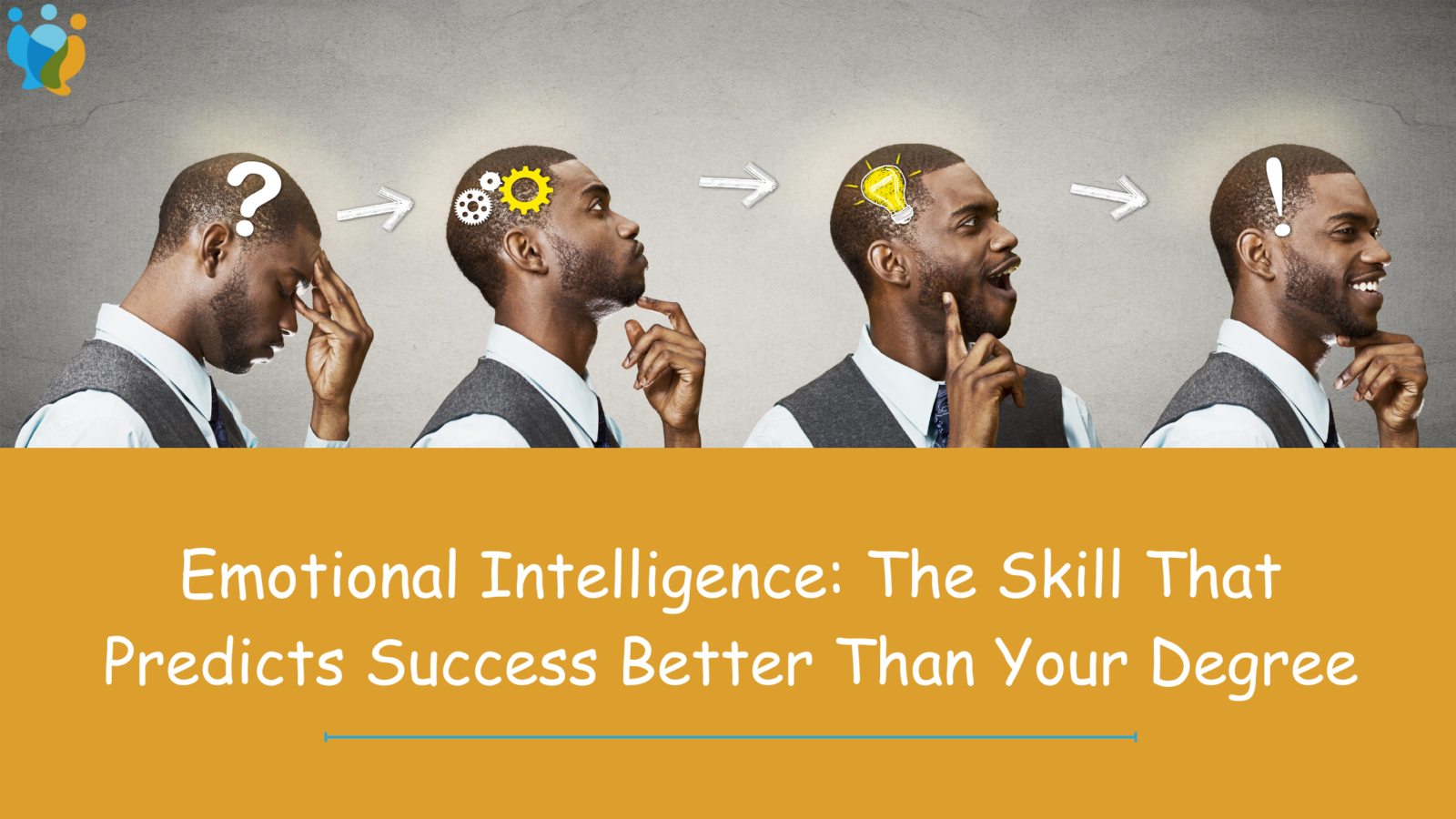
Emotional intelligence, the ability to recognise, understand, manage, and effectively use emotions in yourself and in your interactions with others, isn’t a soft skill.
It is the skill that determines whether your technical abilities translate into actual leadership, collaboration, and career advancement.
And in the Kenyan workplace, where relationships, hierarchy, and unspoken dynamics shape more outcomes than any org chart, it may be the most important professional skill you aren’t developing.
What the Research Says
Emotional intelligence was popularised by Daniel Goleman in the 1990s. The research has matured significantly since.
Meta-analyses consistently show that EI predicts job performance above and beyond cognitive ability and personality. Particularly in roles involving interpersonal interaction, which, in most organisations, is nearly every role.
Goleman’s framework identifies four domains:
Self-awareness. Knowing what you feel and why.
Self-management. Regulating your emotional responses.
Social awareness. Reading the room.
Relationship management. Influencing and inspiring others.
Most professionals are strong in one or two of these.
And significantly underdeveloped in the others.
In Kenya’s working context, emotional intelligence is particularly relevant. Workplace culture is shaped by unspoken hierarchies, indirect communication styles, and a strong emphasis on relational capital.
The manager who can’t read between the lines, or who responds to pushback with authority rather than curiosity, creates dysfunction that no process manual can fix.
Five Signs You Need to Develop Your EI
1. Conversations keep going sideways.
You say one thing, people hear another. Feedback you intend as constructive lands as criticism.
2. You are technically excellent but stuck.
You keep being passed over for leadership roles despite having the strongest track record. Promotions go to people who are less qualified but “better with people.”
This isn’t unfair. It is a signal.
3. Conflict feels like a threat, not information.
When someone disagrees with you, your body tightens. You become defensive or shut down.
Emotionally intelligent people treat conflict as data. Not as war.
4. You can’t name what you are feeling.
If the only answers available to you are “fine,” “stressed,” or “tired”, your emotional vocabulary is underdeveloped.
You can’t manage what you can’t name.
5. Your team performs but doesn’t grow.
People do what you ask. But they don’t innovate, take initiative, or bring problems to you early.
That is compliance. Not trust.
Emotional intelligence is what converts authority into influence. If you’re noticing these patterns, you may also want to explore whether stress at work is affecting your mental health in ways you haven’t fully recognised.
Four Practices That Actually Build It
Emotional intelligence isn’t a personality trait.
It is a set of skills. And like all skills, it can be developed with practice and feedback.
Practice 1: The Pause.
Between stimulus and response, there is a space. In that space is your power.
When you feel triggered by a colleague’s tone, a client’s demand, or a boss’s decision, practise pausing before responding. Even five seconds changes the quality of what comes next.
This isn’t suppression. It is self-regulation.
Practice 2: Name It to Tame It.
Move beyond “stressed” to specifics: Am I frustrated? Disappointed? Anxious? Resentful? Overwhelmed?
The more precisely you name your emotion, the more effectively you manage it.
Neuroimaging research shows that labelling an emotion reduces amygdala activation, your brain’s alarm centre literally calms down when you name what you feel.
Practice 3: Listen to Understand, Not to Respond.
In your next conversation, try this: when the other person is talking, don’t compose your reply. Just listen.
Notice their tone. Their body language. What they aren’t saying.
Then reflect back on what you heard before offering your perspective.
This single practice transforms meetings, negotiations, and relationships.
Practice 4: Seek Feedback, Not Validation.
Ask someone you trust: “What is it like to work with me when things get stressful?”
And then listen without defending.
The gap between your self-perception and how others experience you is where your growth lives. Our self-awareness and basic skills courses are designed to help you close exactly this gap.
Why This Matters, And Where to Start
Mental health conditions cost the Kenyan economy an estimated KES 62.2 billion in 2020 (Kenya Mental Health Investment Case, 2021).
Stress, burnout, and overwork contribute to 36% of work-related diseases.
These aren’t just individual problems. They’re organisational failures of emotional culture. If your organisation is starting to feel the strain, here are 5 signs you need employee wellness training.
But here’s the thing:
Organisations that invest in emotional intelligence training see measurable improvements in team cohesion, conflict resolution, employee retention, and leadership effectiveness. Clarity’s employee wellness packages include EI-informed tools designed for Kenyan workplaces.
And it starts with one person deciding to lead differently.
Maybe that person is you.
Maybe you’re the manager who’s tired of winning arguments and losing trust. Maybe you’re the HR director who sees the cost of disengagement but doesn’t know where to start. Maybe you’re the professional who knows, deep down, that the ceiling you’ve hit isn’t about your skills, it’s about how you show up.
If you work in a helping profession, you may also recognise the toll this takes on your own wellbeing. Rebuilding your capacity to care starts with understanding your own emotional patterns.
Download our free EI Self-Assessment & 30-Day Plan. It takes 15 minutes and shows you exactly where your growth edge is.
Or enrol in our next Emotional Intelligence workshop at Clarity.
No psychology background required.
Just a willingness to grow.
Your technical skills got you this far.
Your emotional intelligence will take you the rest of the way.
Enrol in an Emotional Intelligence Workshop
+254 (0) 114 444 300 | www.pcbuilds.site/sp/
EI workshops • Corporate wellness • Leadership development • Self-awareness training
NITA • TVETA • KCPA Accredited